

All Services
get in touch today!
Location:
Timings:
Salivary Gland Tumors
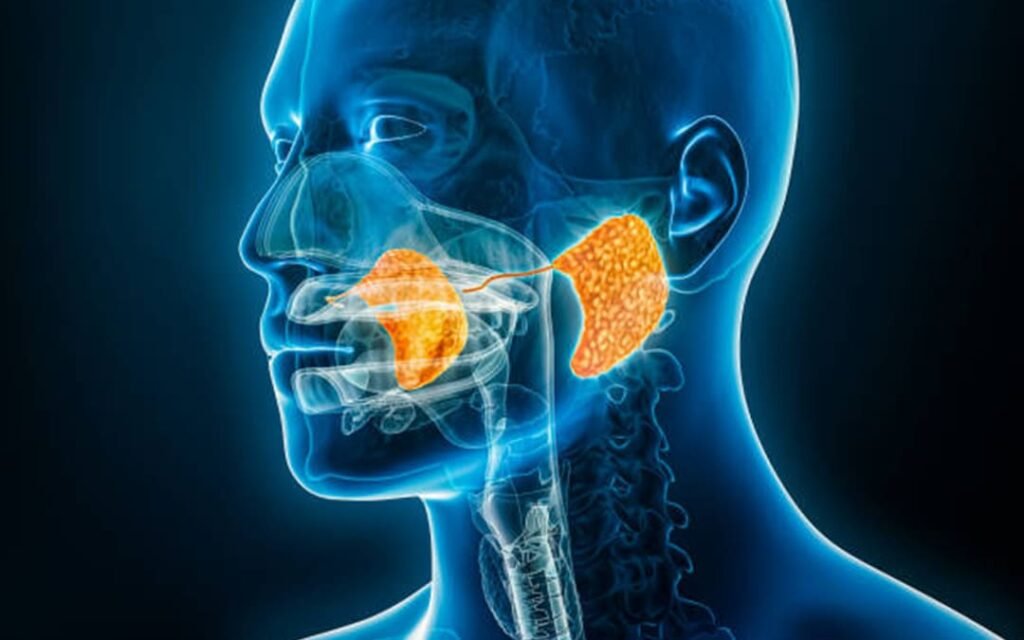
Salivary gland tumors are abnormal growths that develop within the salivary glands responsible for producing saliva. These tumors can be benign (non-cancerous) or malignant (cancerous) and may occur in the parotid, submandibular, sublingual, or minor salivary glands located throughout the mouth and throat. Early evaluation and expert treatment are essential for preserving facial nerve function, swallowing ability, and overall quality of life.
Dr. G. V. Nagarjuna Reddy specializes in the diagnosis and surgical management of salivary gland tumors, offering advanced treatment solutions with a focus on precision, safety, and functional preservation.
Understanding Salivary Gland Tumors
The salivary glands play a vital role in digestion, oral health, and maintaining moisture within the mouth. Tumors can arise from any of these glands and vary widely in their behavior and treatment requirements.
Major Salivary Glands
- Parotid glands
- Submandibular glands
- Sublingual glands
Types of Salivary Gland Tumors
- Pleomorphic Adenoma
- Warthin’s Tumor
- Basal Cell Adenoma
- Oncocytoma
- Mucoepidermoid Carcinoma
- Adenoid Cystic Carcinoma
- Acinic Cell Carcinoma
- Salivary Duct Carcinoma
While many salivary gland tumors are benign, some may become cancerous or cause complications if left untreated.
Symptoms of Salivary Gland Tumors
The symptoms depend on the size, location, and type of tumor.
Common Signs and Symptoms
- Painless lump near the jaw, cheek, or neck
- Swelling around the ear or beneath the jaw
- Facial numbness or weakness
- Difficulty opening the mouth
- Pain in the face or neck
- Difficulty swallowing
- Persistent facial swelling
- Changes in facial appearance
- Recurrent salivary gland infections
Any persistent swelling near the jaw or neck should be evaluated by a specialist.
Causes and Risk Factors
The exact cause of salivary gland tumors is not always known. However, several factors may increase the risk.
Potential Risk Factors
- Increasing age
- Previous radiation exposure
- Tobacco use
- Occupational exposure to certain chemicals
- Family history of salivary gland disorders
- Genetic mutations
Early identification and assessment can help determine the most effective treatment plan.
Diagnosis
A comprehensive evaluation is necessary to determine whether a salivary gland tumor is benign or malignant.
Diagnostic Investigations May Include
- Detailed clinical examination
- Ultrasound scan
- Fine Needle Aspiration Cytology (FNAC)
- CT Scan
- MRI Scan
- Endoscopic evaluation when indicated
- Histopathological examination
Accurate diagnosis allows for precise treatment planning and improved outcomes.
Treatment Options
Treatment depends on the tumor type, size, location, and pathology results.
Surgical Management
Surgery is the primary treatment for most salivary gland tumors. The goal is complete tumor removal while preserving surrounding structures whenever possible.
Parotid Gland Surgery
Specialized surgical techniques are used to remove tumors while protecting the facial nerve and maintaining facial function.
Submandibular and Sublingual Gland Surgery
Tumors affecting these glands may require complete gland removal depending on the diagnosis and extent of disease.
Management of Malignant Tumors
Cancerous salivary gland tumors may require a combination of:
- Surgery
- Neck dissection
- Radiation therapy
- Multidisciplinary cancer care
Importance of Early Treatment
Timely diagnosis and treatment can prevent tumor growth, preserve facial nerve function, reduce complications, and improve long-term outcomes. Early intervention is particularly important for malignant tumors, where prompt treatment can significantly improve prognosis.
Why Choose Dr. G. V. Nagarjuna Reddy?
Dr. G. V. Nagarjuna Reddy offers specialized expertise in Head & Neck Surgery and Surgical Oncology with extensive experience in managing complex salivary gland tumors. His treatment philosophy emphasizes precision surgery, functional preservation, and individualized patient care.